Monday, January 8, 2018


Earnhardt Jr. won his 
15th consecutive
NASCAR  
Most Popular Driver Award
 
Dale Earnhardt Jr., who retired from full-time competition in the NASCAR (National Association of Stock Car Racing) Monster Energy Cup Series at the conclusion of the 2017 season, was named the National Motorsports Press Association's (NMPA) Most Popular Driver for the 15th consecutive year.

Earnhardt, 43, the driver of the No. 88 Chevrolet for Hendrick Motorsports, was named on nearly 68 percent of the votes cast by fans - the Most Popular Driver Award is the only major NASCAR award determined solely by fan vote. It has been presented annually since 1953 - the recipients were originally determined by a poll of the competitors but it became a fan-driven program in 1984 under the auspices of the NMPA.

Earnhardt is one of eight drivers to receive the award on multiple occasions. Other multiple-time Most Popular Driver award winners include Lee and Richard Petty, Bobby Allison, David Pearson, Fred Lorenzen, and Darrell Waltrip.  

Only one driver, Bill Elliott, has won the award more times than Earnhardt Jr.  Elliott was named the series’ most popular driver 16 times between 1984 and 2002. Dale Earnhardt Sr. broke Elliott’s stranglehold from 1991 to 2001, when he won the Most Popular Driver award for the only time in 2001.

In addition to hosting the voting platform for the Monster Energy NASCAR Cup Series Most Popular Driver award, fans voted to determine the Most Popular Driver in the NASCAR XFINITY and Camping World Truck Series also hosted on NASCAR.com.

 Elliott Sadler, who finished second in the XFINITY Series championship battle won the NASCAR XFINITY Series Most Popular Driver award and Sunoco Rookie of the Year Chase Briscoe was voted the Camping World Truck Series Most Popular Driver by fans.
 
Information for this article was provided by NMPA, of which the author is a member.

Tuesday, January 2, 2018


deTomaso Pantera by Ghia
 imported by Lincoln-Mercury


In September 1969 Ford Motor Company signed an agreement with Italian auto manufacturer Alejandro deTomaso to build a high-volume wedge shaped mid-engine budget supercar, the Pantera (panther in Italian) for the United States market.
Ford knew there would be a limited window of sales for this car as the Tom Tjaarda design would not meet 1975 United States crash standards, but Ford anticipated selling 5000 Panteras a year in the United States at $10,925.00 each through Lincoln-Mercury dealers. At that time a Ferrari sold for $25,000, so Ford was selling a supercar at a bargain price.  

The first Pantera, a yellow car shown at the 1970 Los Angeles Auto Show was actually a European market car with push button doors and was later photographed for the initial Pantera brochures. The Pantera was powered by a Ford 351 cubic inch V-8 fitted with a four barrel carburetor that produced 310 horsepower.
 
click to enlarge
 
The mid-mounted engine fed the power to the independently suspended rear end through a ZF five-speed transmission. With a curb weight of 3123 pounds the Pantera accelerated from a standing start to 60 miles per hour (MPH) in 5.5 seconds and covered the quarter mile in 14 seconds.
 
The Pantera was a hand-built Italian supercar with four wheel power disc brakes and four-wheel independent suspension and cast magnesium  wheels  but being hand built, the cars had some problems. The author recalls making a trip with his father in 1971 as a thirteen year old to a Lincoln-Mercury dealer in Fort Wayne Indiana to look at a Pantera.
 
Upon arrival, the dealer’s salesman was unfamiliar with the car and had no brochures. The dealership’s single medium blue example was not on the showroom floor, but rather was in the service department. The salesman admitted the car wouldn’t run and was in the shop to diagnosis an apparent electrical problem.

My father and I were left alone to wander back into the empty dealership service area to look at the car and were shocked at the poor build quality in the interior and exterior panel fitment. Panteras were notoriously unreliable, with engine cooling issues as well as an inadequate cockpit ventilation system. My father bought a Lincoln Mark III instead (as if he was going to buy anything else).   

Several celebrities owned Panteras. Elvis Presley bought a yellow Pantera for one of his girlfriends, and when it wouldn’t start the enraged star shot the steering wheel, after which the car reportedly started. Playboy Enterprises bought a white 1972 Pantera, had it stripped and painted pink and gave the car to 1972 Playmate of the year Liv Lindeland. In 1974 Canadian hockey star and restaurateur Tim Horton died after he crashed his 1972 white Pantera at over 110 MPH and  was ejected. A later investigation revealed that Horton's blood alcohol was twice the legal limit.   
 
 
click to enlarge
 
The early Panteras were equipped with attractive thin chrome bumperettes, but by 1973 to meet the new US crash standards, the Pantera Lusso (“L”)  as the example seen at the “Autos of Alamo” car show was equipped with energy-absorbing reinforced steel rubber bumpers which were certainly more attractive than some cars’ added safety bumpers.   
 
At the end of the 1974 model year, as planned Lincoln-Mercury dropped the Pantera line with a  documented total of only 5262 cars sold, far short of the planned 5,000 a year. Many of the surviving Panteras have been modified as the one seen at Alamo which has a non-original pant color and  is fitted larger diameter wheels which are similar to the original Campagnolo design in addition to obvious engine upgrades.
 
The 1973 Pantera had a redesigned instrument cluster with optional wood grain – the original Pantera featured a “twin pod” design
 
All photographs by the author  

Tuesday, December 26, 2017


Bradley Kilby- Virginia’s Rising Star

 
Bradley celebrates another 2017 victory
photo courtesy of Kilby Racing

 
Fourteen year-old Bradley Kilby from the historic town of Bealeton Virginia had a very successful 2017 racing season as he captured ten race victories at two tracks in fifteen outings. Bradley won the 2017 INEX Bandolero championship at Dominion Raceway and fell just one point shy of winning the 2017 INEX Bandolero championship at Langley Speedway. INEX is the sanctioning body for Legends racing worldwide is the third largest short track racing sanctioning body in the world and boasts current NASCAR stars Chase Elliott, Alex Bowman, and Austin Dillion as alumni.  
 
Bradley on a victory lap in his Bandolero
photo courtesy of Kilby Racing
 

Bradley who hones his skills off the track on iracing.com drove machines owned by his parents Wes and Lorri Kilby with sponsorship from MN Upholstery Services, Express Auto Service, Robert Dodson & Son, Sky Signs, Laymans Drafting Service and Tower Racing. Bandoleros are tube-chassis cars which stand only 34 inches tall, powered by a sealed 30-horsepower Briggs & Stratton Vanguard V-twin engine connected to a centrifugal clutch.  A 750-pound full-fendered Bandolero car rides on 6-inch wheels fitted with spec tires with adjustable coil over shock absorbers on the rear wheel which places a premium on driver ability.
 
Bradley celebrates his runner  up finish
at the 2017 Langley Speedway banquet
photo courtesy of Kilby Racing
 

Dominion Raceway in Thornburg Virginia where Kilby claimed five victories in six starts enroute to his 2017 track championship is a slightly banked 4/10-mile asphalt track, similar to the historic .397 mile Langley Speedway in Hampton Virginia where Bradley finished just one point behind the INEX Bandolero track champion Jacob Putman, although Kilby scored five City Cycle Corporation series wins during the season compared to Putman’s two wins.  


Bradley with Frank Kimmel
photo by the author
 
While at the 2017 edition of the Performance Racing Industry (PRI) trade show in Indianapolis in early December, Bradley networked with and learned valuable career lessons from racing legends that included 10-time ARCA racing series champion Frank Kimmel and long-time IndyCar crew chief and current Harding Racing team manager Larry Curry.   

For the 2018 racing season, Bradley Kilby is moving up in class to race the Dominion Raceway Late Model series with a Chevrolet-bodied car powered by a Chevrolet ‘603’ crate engine fed by a two barrel carburetor. The 17-race DRLM series kicks off on April 7 2018 and will continue through October 20. Check back on this site frequently during the 2018 racing season to keep up with Bradley’s success, and remember to “like” Kilby Racing on Facebook.    
 
Bradley practices his victory lane pose next to the car of
Austin Theriault the 2017 ARCA champion
photo by the author
 

Wednesday, December 20, 2017


Lexus RCF GT3 race car


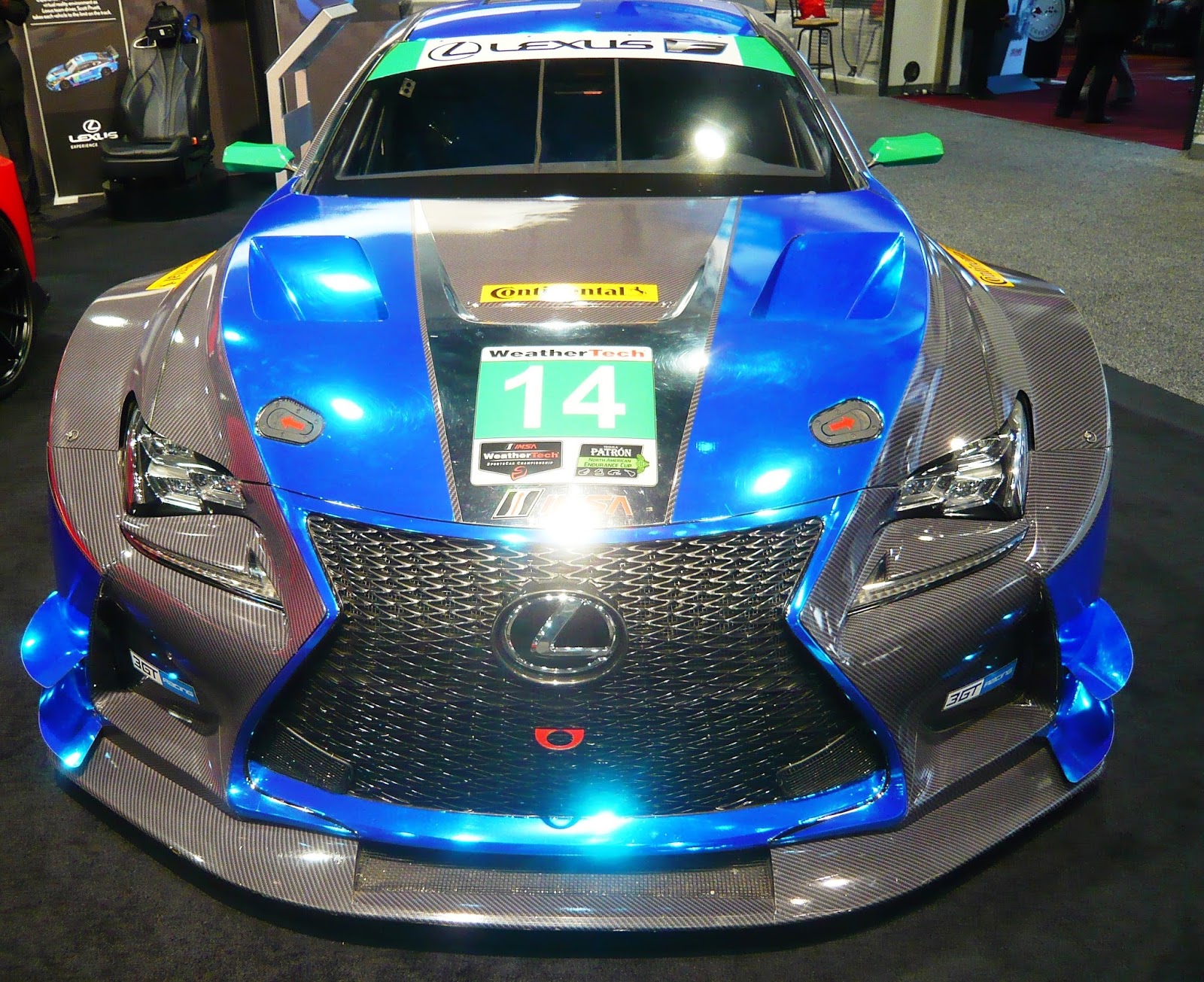
The latest Lexus sports car racing hardware was display at the Lexus USA booth at the 2017 SEMA (Specialty Equipment Market Association) show in Las Vegas.
The Lexus RCF GT3, derived from the RCF passenger car competed in the Grand Touring Daytona (GTD) class of the 12-race 2017 IMSA (International Motor Sports Association) WeatherTech SportsCar Championship.


The GTD class cars are enhanced versions of production models which comply with the global Fédération Internationale de l'Automobile (FIA) GT3 specifications, in essence making GTD a “spec series.”  GT3 class machines consist of entries from manufacturers that include the Acura NSX, AMG-Mercedes, Aston Martin Vantage, Audi R8, BMW M6, Ferrari 488, Lamborghini Huracan, Porsche 911 and the Lexus RCF. Worldwide, GT3 cars race in the FIA GT3 World Cup, the International GT championship and in national series which include the Italian, Spanish, Australian, and British GT series and the WeatherTech series.


In IMSA WeatherTech GTD racing, all the cars in the class utilize steel tube frames with integral roll cage, front and rear independent coil spring suspension and rid on the specified Continental tires, with the use of traction control and ABS (anti-skid) braking permitted.


The Lexus RCF race car is 4 inches longer than the $65,755 MSRP (manufacturer's suggested retail price) production car and is 5 inches lower overall but shares the same 107 ½ inch wheelbase. The race car weighs just over 2800 pounds whereas the production car weights nearly two tons. 

Both the production and race car are powered by the 2UR-GSE engine, a direct injected all-alloy four-camshaft 32-valve V-8. The production car's engine displaces 303 cubic inches, while for GTD competition it is bored out to 330 cubic inches to produce over 500 horsepower on the specified VP E-10 racing fuel.

For 2017 Lexus fielded a two-car team in GTD run by 3GT Racing, formerly known as F Performance Racing owned by 5-time SCCA Trans-Am champion Paul Gentilozzi.   The #14 car was driven by Scott Pruett and Sage Karam, with the #15 car piloted by Jack Hawksworth and Robert Alon.  
 
Scott Pruett
 
 
Pruett, considered the preeminent active American sports car racer, won the Rolex Daytona 24-hour race seven times, along with three SCCA Trans-Am championships and four Grand American (the forerunner to IMSA) championships. Pruett who left Chip Ganassi Racing at the end of 2016 has a long relationship with Lexus dating back to 2004 when he won the Grand American championship in a Lexus-powered prototype. 
 
 
Sage Karam
 

Pruett’s teammate in the #14 car, Pennsylvania native Sage Karam served as the Lexus team's test development driver  during 2016 before competing full-time in the 2017 WeatherTech series. Karam took time out to race in the 2017 Indianapolis 500-mile race where he finished 28th after a battery failure in his  Dreyer & Reinbold Racing entry. 
 
Jack Hawksworth
 

Hawksworth from Britain raced from 2014 to 2016 full-time in the IndyCar series first for Bryan Herta Racing and then for AJ Foyt Enterprises, with a best series finish of third in his rookie year at the Shell and Pennzoil Grand Prix of Houston on the Reliant Park temporary race course.  
 
Robert Alon
 

Hawksworth's teammate in the #15 car, Robert Alon from Santa Monica California rose quickly from kart racing to the Prototype category in 2014 mid-season finished third in the class championship in his first full season of 2015 and then finished second in 2016 with three class wins.
 

For 2017 the 3GT Racing Lexus team cars carried sponsorship from Mark Levinson luxury audio, the manufacturer of high-end home audio equipment and car audio systems which are exclusively designed and offered as a premium sound system for every Lexus model (a $2550 option on the RCF).

Mark Levinson Premium Surround Sound systems take advantage of amplifiers driven by DSP Software for advanced signal processing to deliver what the manufacturer claims is the widest range and highest quality of car audio sound on the market.

Unfortunately the 2017 WeatherTech Sports Car season was a series of disappointments for the two Lexus 3GT Racing  teams, as the cars were fast in qualifying but failed to finish on the podium in 12 races.


At the season-opening  Rolex 24 hours of Daytona, the series’ premier event, Pruett crashed out in the #14 car before the end of the race's second hour, and the #15 car finished 14th in the GTD class, 53 laps behind the winning Porsche 911. At the historic Mobil Sebring 12-hour endurance race, the Lexus cars struggled home to finish 13th and 18th in class.

The #15 car scored its 2017 season's best a fifth place finish in class at the 6-hour Watkins Glen race, which the #14 team matched at the WeatherTech series’ next race at the Canadian Tire Motorsport Park (Mosport).

In the final WeatherTech driver championship points, Alon led the team in 12th followed by Hawksworth in 14th, Karam in 15th and Pruett in 16th. Lexus ranked eighth the final WeatherTech GTD manufacturers rankings, won by the Scuderia Corsa Ferrari 488 piloted by GTD class driver champion Alessandro Balazan.

For additional information please check out these websites


Race car photos by the author - passenger car photos courtesy of Lexus USA - driver photos courtesy of 3GT Racing


Monday, December 18, 2017


Up-close with a Mercedes-AMG GT3 race car
AT PRI 2017  


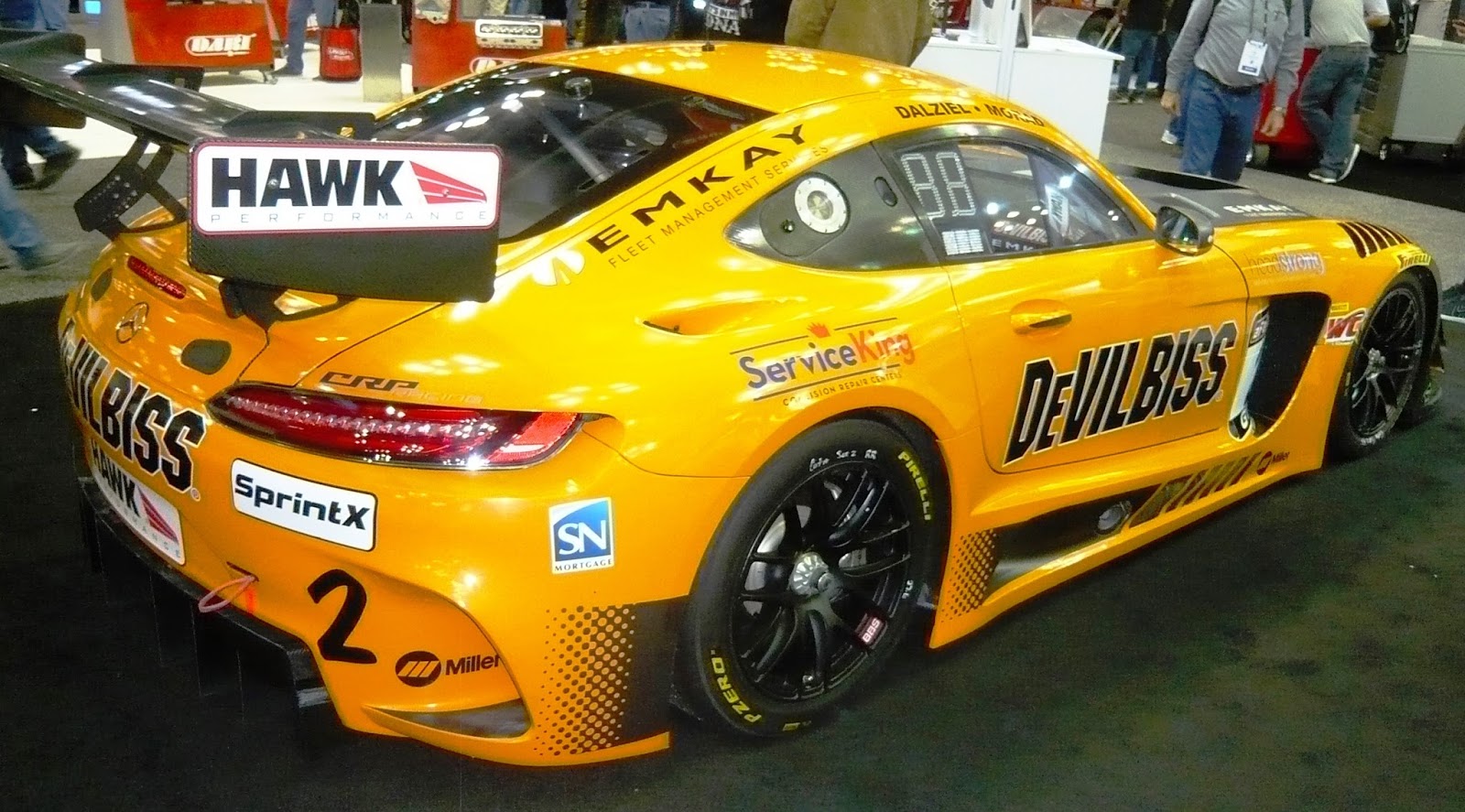
The Hawk Performance (brakes) booth at the 2017 Performance Racing Industry (PRI) trade show in Indianapolis featured the CRP Racing Mercedes-AMG GT3 which competed in the 2017 Pirelli World Challenge Series SprintX GT series. Drivers Ryan Dalziel and Daniel Morad combined to finish second in the drivers’ championship, while the CRP Racing team finished third after the 11-round season which featured five rounds held in support of the IndyCar Series. Sanctioned by the United States Auto Club (USAC), SprintX races were sixty minutes long with mandatory driver and tire changes.

CRP (Competition Race Parts) Racing based in Harrisburg North Carolina is a race car engineering company owned Nicholas Short who has experience in IndyCar, NASCAR, Trans-Am, Group C Endurance Racing, Baja desert racing and the World Challenge series. In 2016, CRP Racing competed in the 2016 SprintX GT series with an Audi R8 LMS and finished eighth in team points while Canadian driver Kyle Marcelli finished tenth in the 2016 drivers’ points championship.   

Driver Ryan Dalziel born in 1982 is one of Scotland’s leading race car drivers and in addition to the Pirelli World Challenge, finished fifth in the Tequila Patrón ESM Nissan Onroak DPI in the 2017 IMSA Weathertech season points in his fourth season with that team.  During the 2017 Pirelli World Challenge GT season, with his teammate Canadian Daniel Morad, the pair won two rounds at Virginia International Raceway and the Circuit of Americas.  


As with the street version of the Mercedes-AMG GT, the GT3 racer’s structure consists of a light stiff aluminum spaceframe with an integral high-strength steel roll cage. The Mercedes-AMG GT3 is powered by a 6.2-liter (380 cubic inches) V-8 M156 engine with unique bore spacing, and block design. The naturally aspirated powerplant which features dry sump lubrication produces 550 horsepower and 550 foot/pounds of torque.
 
All that power mean a BIG radiator
 

That power is fed through a sequential six-speed racing transmission with a multiple-disc limited-slip differential with adjustable traction control which is mounted on the aluminum double-wishbone rear axle for optimal weight distribution.  Mercedes-AMG sells the 2850-pound FIA GT3 regulation-compliant race car which can accelerate from 0-60 miles per hour in 3.5 seconds to race teams for $424,300.


The team’s primary sponsor, Devilbiss, manufactures and sells atomization & spray guns for the automotive painting industry – products that range from gravity guns, suction guns, pressure guns, and airbrushes as well as disposable paint cups and air filtration systems such as desiccant dryers and waterborne dryers.


Hawk Performance, a brand of Carlisle Brake & Friction, has been in motorsports market since 1990, offering engineered friction products (rotors and pads) for nearly every type of racing-  pavement short track, dirt short track, sports and GT cars, open-wheel road racing and drag racing. Hawk Performance also offer products designed specifically for passenger cars and motorcycles.  
Rumors heard on the floor at PRI 2017 have Nicholas Short and CRP Racing entering an LMP2 program in the 2018 IMSA Weather Tech SportsCar Championship and possibly the 24 hours of LeMans.                             

For additional information- check out these websites


All photos by the author

Monday, December 11, 2017

A Corvair Low Rider  


This radical 1966 Chevrolet Corvair Monza low rider, shown in the House of Kolor booth at the 2017 SEMA (Specialty Equipment Market Association) booth, perked a level of interest because the author drove a red 1967 Chevrolet Monza in high school. Needless to say, this Corvair is way cooler than that long-lost ride.  
 
 
Click to enlarge
 

If this finished low rider Corvair is not unique enough, consider that it was originally assembled in the General Motors Suisse assembly plant in Bienne Switzerland, one of the four Corvair assembly plants still in operation in 1966, along with the Willow Run Michigan, Oshawa Ontario Canada, and Van Nuys California.
 
The second generation restyled Corvair was released in 1965 known as the "Z-Body" with elements of the 1963 Larry Shinoda Sting Ray design. The second generation Corvair was longer and lower and used a three-link rear suspension and coil springs instead of the original swing arm suspension which had attracted the ire of consumer advocate Ralph Nader.

Upon its release, Car and Driver  editor David E. Davis wrote that "the new Corvair is — in our opinion — the most important new car of the entire crop of '65 models, and the most beautiful car to appear in this country since before World War II."


This Corvair was customized in 2012 by Romain Roulleau’s “New Ride” shop in Norges la Ville, France, with the door handles removed and doors mounted suicide style and the hydraulic system installed before the car was painted Djoce Custom Paint using House of Kolor products, an American company founded in 1956 and a division of Valspar since 1977.   
 
click to enlarge
 

The 161-cubic inch 140-horsepower air-cooled "boxer" six-cylinder chromed and detailed engine was built by Julien Pitault in Dijon France.

All photos by the author

Saturday, December 2, 2017

Aria XFE revealed 


On Thursday November 30 during a press conference at the Los Angeles Auto Show the Aria Group revealed their latest creation the FXE, an American built hybrid hypercar that will challenge the best exotic car built in Europe.


The Aria Group is a leader in providing a full range of design, engineering and manufacturing solutions to meet any request from the transportation, aerospace and entertainment industries. Aria has nearly 20 years of expertise combining the latest advances in rapid manufacturing technology with innovative design and creative engineering to produce advanced and complex projects.  Aria has built one-off manufacturer concept cars and movie vehicles which include the Ford GR-1 and the Kia GT4 Stinger concept cars. 


The basis of the Aria Group’s new dream car is its patent-pending Integrated Composite Structure chassis concept. The pending nature of the intellectual property restricts how much can be revealed but the Aria Group says that it’s a less labor-intensive production method for a carbon-fiber tub with all the powertrain and suspension mounting attachment hardware integrated into the tub.


A supercharged small-block V-8 from an as-yet-unnamed American manufacturer (possibly the Corvette ZR-1 powerplant?) producing 720 horsepower will be bolted in the rear of the tub.  Aria is still negotiating for the supplier of a seven-speed dual-clutch transmission but Xtrac which exclusively supplies transmissions for the INDYCAR series seems likely to get the contract.


The FXE will also have pair of axial-flux induction electric motors that add another 540 horsepower to drive the front wheels, which makes the car’s total output 1,150 horsepower.  The energy for the front motors will be stored in a 10-killowatt per hour lithium-ion battery pack. The Aria Group promises eye-popping performance from the FXE – Zero to 60 miles per hour (mph) in 3.1 seconds with a top speed of 220 mph.  


Keep up with the forthcoming details of the Aria FXE on these pages, or check out their website for more details.


Photos and construction details provided by The Aria Group