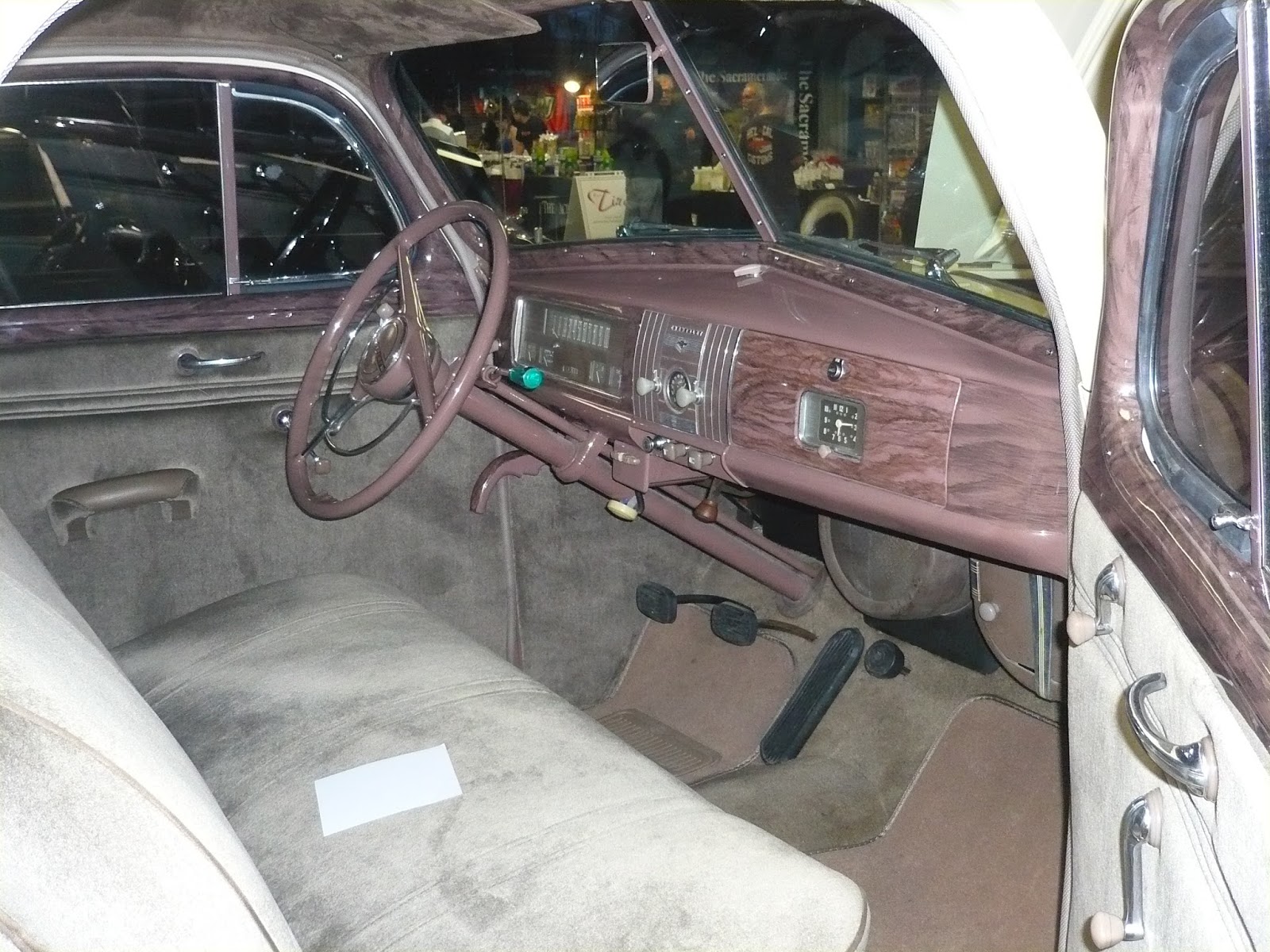
1940 LaSalle 1940 5027 2-door coupe
As early as 1923 General Motors (GM) President Alfred P.
Sloan developed the concept of the GM Companion Make Program to fill
gaps he perceived in the General Motors product portfolio. General Motors sales
executives referred to what Sloan created as “The Ladder of Success.” As a man (or woman)
became more financially successful, they would work their way up the ladder to
the pinnacle for GM, the purchase of a Cadillac.
In general, the “companion make” was built and marketed alongside
the parent brand but was priced lower than the parent automobiles (except in
one case). Chevrolet was designated as the entry level product line for GM,
followed in ascending order followed by the new-for-1926 companion make,
Pontiac, then its parent brand, Oakland which had been part of General Motors
since 1909.
Next on the GM hierarchal parade came Oldsmobile then its
higher priced companion Viking which was
officially sold for two model years 1929 and 1930, although 353 1931 Vikings
were built with leftover 1930 parts. The next step up for the GM buyer was the
revived Marquette nameplate (dead since 1912) which sold from 1929-1931 as the
lower cost companion to Buick. Above the Buick was the Cadillac “companion
make” LaSalle which was sold from 1927 to 1940, and ultimately, the Cadillac. Topping
the General Motors universe of makes was
LaSalle took its name from the French explorer Robert
Cavelier de La Salle who explored from the Great Lakes to the Gulf of Mexico
beginning in 1673 and claimed the entire Mississippi River basin as “Louisiana”
for the King of France before his men mutinied and killed him in 1687.
The 1927 LaSalle Pacemaker is shown in this photo
from the Indianapolis Motor Speedway Collection
in the Center for Digital Studies in the IUPUI University Library
LaSalle was selected to provide the “Pacemaker” for
Indianapolis 500-mile race on three occasions. In 1927 the LaSalle V-8 Series 303 roadster was driven by former race car driver
Willard “Big Boy” Rader who had appeared in two of the first four Indianapolis
500-mile races as a relief driver.
Willard "Big Boy" Rader seated in the Lasalle Official Pacemaker
courtesy of the Indianapolis Motor Speedway
A
month after the ‘500,’ Rader drove a similar stripped-down LaSalle 303 roadster
on a timed test at the nearly 4-mile concrete oval at the GM Milford test
track. The car fitted with an optional high-compression cylinder head was
completely stock stripped of its headlights, running boards, windshield and
fenders covered 952 miles in ten hours before a broken oil line stopped the
run.
The 1934 LaSalle Pacemaker is shown in this photo
from the Indianapolis Motor Speedway Collection
in the Center for Digital Studies in the IUPUI University Library
Ralph DePalma is shown in the 1934 LaSalle Pacemaker in this photo
from the Indianapolis Motor Speedway Collection
in the Center for Digital Studies in the IUPUI University Library
In 1934 the new LaSalle straight eight-powered Model 350
convertible styled by Harley Earl and driven by Rader (who had driven the 1931
Cadillac Pacemaker) was the Official Pacemaker for the Indianapolis 500-mile
race. In 1937 a LaSalle Series 37-50 convertible
coupe served as the Official Pacemaker piloted by the recently retired Raffaele
“Ralph” DePalma the 1915 Indianapolis 500 mile race winner.
Over time the General Motors companion make strategy was
abandoned mainly due to the automotive sales slump created by the Great
Depression. As mentioned above, the Viking and Marquette makes were short-lived
and the Oakland nameplate was killed in 1931 but its companion make Pontiac
lived on until 2010.
LaSalle built some outstanding automobiles, but sales were
never brisk. After a peak number of 22,691 cars were sold during the 1929 sales
year, three years later sales dropped to a low of 3,290 cars. The strikingly restyled
1937 LaSalle broke all previous sales records with 32,000 units sold through
the model year. Following a dip in 1938
model year sales to just 15,501 units, the LaSalle was restyled again for 1939
and sales rebounded to 23,032.
For 1940, the LaSalle was redesigned for the second year in
a row, this time by William Mitchell head of the Cadillac Studio. LaSalle sold
two distinct models in 1940 - the series 50 and the series 52, which was referred
to in Cadillac sales literature as “the Special.” Both the series 50 and 52 LaSalle rode on a
123-inch wheelbase chassis with a 59-inch track and 7 x 16-inch wheels powered by an L-head, cast iron block V-8
engine that displaced 322 cubic inches and fitted with twin Carter carburetors developed
130 horsepower.
The 50 series featured an Art Deco hood ornament,
streamlined headlamps integrated into the fenders, three side hood louvers and
a split front windshield. The Series 52
had a wider, 45-degree sloping windshield, a larger curved rear window, no
belt-line molding, a rounder, smoother line down the rear of body and was 3-3/4
inches longer overall. To show how
automotive design was changing during this period, running boards were a offered
as a “no cost” option. A 1940 LaSalle came standard equipped with three chromes
strips at the bottom of the body which added to the sleeker lower look.
For the 1940 model year Cadillac and LaSalle offered seven models
with a total of 51 distinctly different cars with pricing that began at $1000 and
topped out with the magnificent Cadillac Sixteen of which only fifty were built
at a price of over $6000. LaSalles came
standard with “Hi-Test Safety Plate Glass” advertised as providing a clearer
view than laminated glass and Cadillac “Controlled Action Ride” with improved knee-action
suspension which when combined with thick foam rubber padded cushions on the
seats made them “America’s finest riding cars.”
All 1940 LaSalle bodies featured a one-piece solid steel “turret
top” reinforced with steel roof bows and roof rails welded to the inner steel
body framework. LaSalle advertised that the fully-welded bodies were “insulated
at every point for quietness and comfort;” the top, door panels and floor were insulated
with thick asphalt impregnated felt while the dash and cowling area was covered
with heavy jute matting and Celotex ™ board (asbestos impregnated fiberboard).
Heavy rubber pads surrounded the body bolts to “eliminate body
rumbling inherent with cars with single unit frames” and were effectively
weather sealed to “prevent the entry of dust water and drafts.” Steel drip moldings,
a long-lost feature on modern cars, were furnished to “prevent annoying water
from dripping on passengers entering or leaving the car.”
This car, a model 5027 2-4 Coupe owned by Marshall Krause was
on display at the 2017 Sacramento Autorama. With an original list price of
$1180 there were 1,525 LaSalle 5027 2-4 coupes sold during the 1940 model year.
This car which has been completely restored is powered by a non-original engine
which was bored out to a displacement of 346 cubic inches using period-correct
Cadillac rebuild specifications by Top of The Hill Performance Center in
Livermore, California.

The car as shown is equipped with optional amber lenses fog
lights which sold for $14.50 in 1940 for
the pair installed, a rear view mirror ($4.50 installed), a grille guard ($10.00
installed) and chrome wheel trim rings which
sold for $1.50 each installed. This example recently was offered for sale at
the end of January 2017 on the internet auction site http://bringatrailer.com/ but was
a no-sale as the highest offer of $35,000 did not meet the seller’s reserve.
Perhaps serious LaSalle enthusiasts held back on bidding since the car is finished
in a PPG Paints Tan, a color which was not offered on the standard 17-color LaSalle
palette for 1940.
1940 Series 50 model year sales ended with 10,382 cars sold
and with Series 52 production factored in, LaSalle was 15th overall in US auto
sales with a total of 24,133 cars sold for 1940. Although 1940 was Lassalle’s second highest
sales year ever, it wasn’t enough as the marque was killed by General Motors in
the summer of 1940 although there were three possible new 1941 designs in the
midst of development.
The LaSalle nameplate was briefly resurrected in 1955 for
the General Motors Motorama shows with two LaSalle II concept cars. Both used fiberglass
bodies; the first design was a small four-door hardtop sedan while the other
was a truncated two-seat convertible roadster. Both cars which were non-running
examples with V-6 aluminum engines castings under their hoods, shared the same vertical
grille opening design reminiscent of the 1940 LaSalle.
Color photos by the author.