Wednesday, May 24, 2017

Scenes from Willie Davis' memorial service

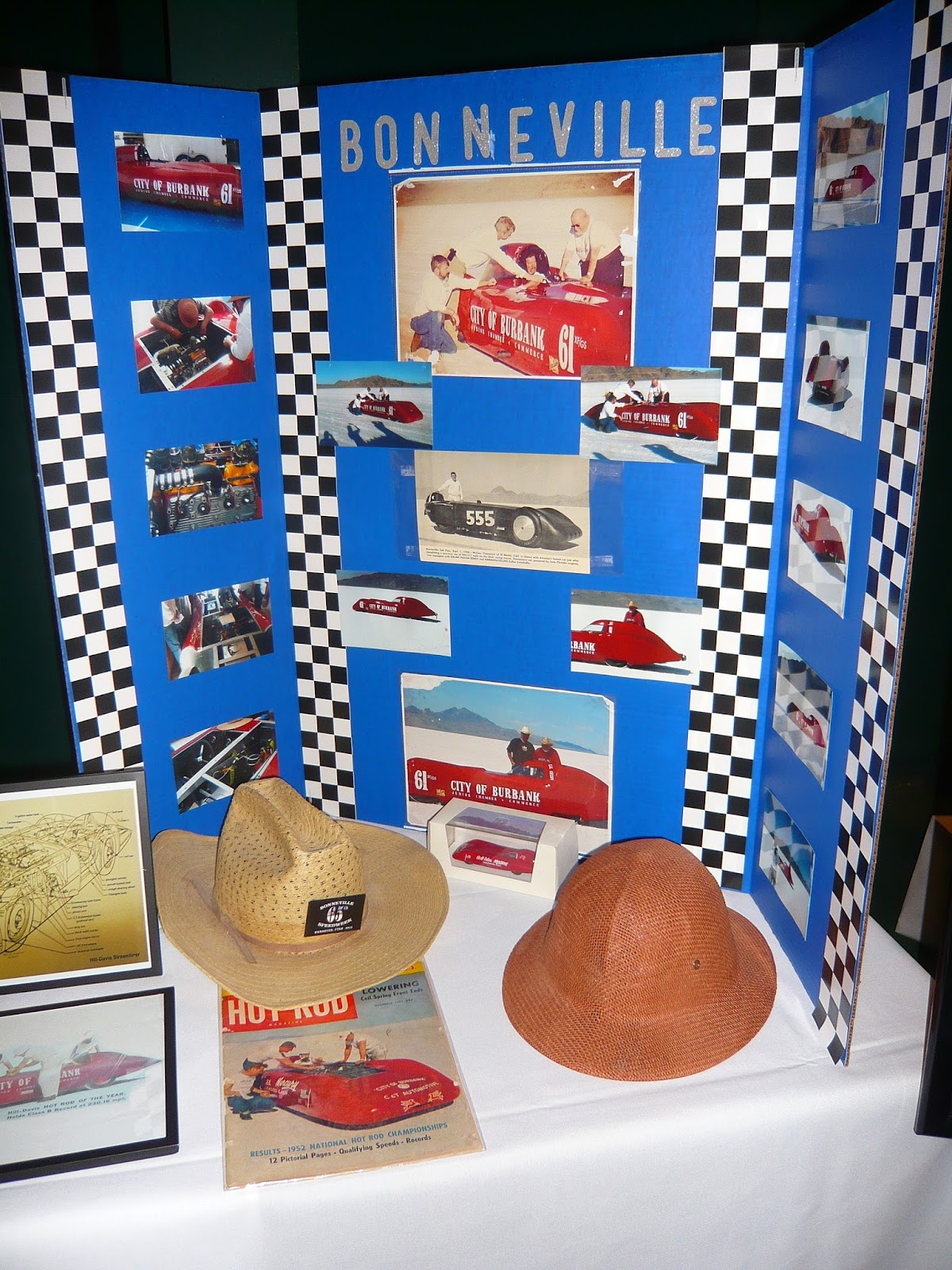
Famed racing mechanic Willie Davis passed away on April 16 2017, and his sister and daughters hosted a memorial service May 24th at the Brickyard Crossing. The author attended and exchanged some great stories about Willie at the service. The service also featured a large display of mementos and photographs from Willie's life and one table contained a collection Willie's trophies and plaques that documented his many accomplishments.


One table documented Willie's accomplishments with 
the City of Burbank streamliner at the Bonneville Salt Flats 


 All photographs by the author 

Monday, May 22, 2017

Chad Nichols claims BCRA Ukiah victory


The midget racers of the Bay Cities Racing Association (BCRA) continued their 78th year of providing racing excitement throughout the state of California with a stop at Ukiah Speedway located on the grounds of the Redwood Empire Fairgrounds along together with a contingent of BCRA vintage midgets.

In time trials Chad Nichols set a torrid pace of 12.496 seconds in the orange Shanoian Esslinger to lead all qualifiers, trailed by David Goodwill at 12.666 seconds for second fastest, and Maria Cofer in the Arata Racing #88 third at 12.913 seconds. Floyd Alvis is his #1 Buick powered machine was the fourth fastest as JR Williams Fontana-powered #74 rounded out the top five qualifiers.

The #88 of Trophy Dash winner Maria Cofer 


Maria Cofer jumped into the lead at the drop of the green flag for the trophy dash and led all four laps to claim a popular victory while Floyd Alvis repelled David Goodwill’s repeated passing attempts to claim second place, while Chad Nichols came home in fourth place.

Ms. Cofer again grabbed the point at the start of the heat race and led the first three circuits until the Arata #88 midget pushed high out of the groove in turn two which allowed Nichols and Goodwill to slip past her. At the drop of the checkered flag after six fast laps, Nichols claimed the win over Goodwill, Cofer, Alvis and Williams.


The BCRA drivers met the fans at Ukiah
Form top to bottom Chad Nichols, David Goodwill and Maria Cofer 


During the track intermission before the feature race, many fans took advantage of the opportunity to meet and get the autographs of BCRA drivers Chad Nichols David Goodwill and Maria Cofer. In the BCRA vintage feature, Norm Gray’s car refused to fire and Bob Pena claimed the trophy over Doug Shanoian.

Once again, Ms. Cofer took the point at the start and held off repeated attempts by second-place runner Goodwill to pass her using the upper groove of the slightly banked paved ¼-mile track. These efforts nearly resulted in disaster on lap 5 as Goodwill slid high out of the “groove” in turn one and onto the dirty part of the racing surface. As Goodwill masterfully fought for control through turn two, Nichols slipped past and led duo stretched out a 10-car advantage over Goodwill’s black #3g machine.

The machine of winner Chad Nichols 


On lap 13, leader Cofer encountered lap traffic as she entered turn three and she tried to pass the slower cars of Alvis and Williams on the high side of the race track, but she lost momentum out of the “groove.” Chad Nichols pounced and made a nifty set of moves to pass Cofer and then clear the lapped traffic. Over the final 11 laps, Nichols stretched his lead to more than five car lengths at the checkered flag over Cofer, with a fast-closing Goodwill in third, and Alvis fourth as JR Williams failed to finish.


The BCRA dirt midgets return to action in an action-packed back-to-back weekend of races which begins Friday June 9 at scenic Ocean Speedway and concludes the next day with BCRA’s first visit of the season to Petaluma Speedway.   

all photos by the author

Sunday, May 21, 2017

1957 Oldsmobile Super 88 convertible coupe 


Oldsmobile sold its ‘88’ series from 1949 through 1999, and for 24 years the 88 was Oldsmobile’s top-selling marque. The ‘88’ was redesigned for the third time in 1957 based on the 1956 Motorama Oldsmobile two-passenger show car with stylized rocket emblems  mounted on the fenders above the headlights and taillights reminiscent of jet engine exhausts. 


There were three trim levels the basic model was known as the ‘Golden Rocket 88,’ with the next step up the ‘Dynamic 88,’ and the highest trim level dubbed the ‘Super 88.’  Of the near 385,000 Oldsmobiles built during the 1957 model year, 132,000 were 'Super 88' models and just 7,128 were Super 88 Convertibles like this mildly customized version owned by Win and Edda Moore seen at the Moraga Community Faire car show held May 13 at the Rheem Valley Shopping Center. 


Under the hood, the Oldsmobile ‘Rocket V8’ engine in the ‘88’ series sported 371 cubic inches of displacement and to celebrate Oldsmobile’s 50th anniversary all engine blocks were painted gold.  The base level 'Golden Dynamic 88' engine produced 277 horsepower, but the engine in the 'Super 88' series featured a four-barrel Rochester Quadrajet carburetor and produced 300 horsepower. 


The high-performance 'J-2' option added three two-barrel carburetors and high performance camshaft  which increased output to 310 horsepower with 400 ft/lbs of torque.


The convertible coupe rode on 122-1/2 inch wheelbase chassis with front coil springs and rear leaf springs and a curb weight of 4285 pounds.  A 1957 Oldsmobile Special 88 could accelerate from a standing start to 60 miles per hour in just over 9 seconds, and when equipped with the J-2 option knocked a second off that time.  


In the interior for 1957, Oldsmobile added a "safety" deep-recessed steering wheel. This car is equipped with the Hydramatic transmission instead of the three-speed column shifted manual transmission. 

All photographs by the author


Wednesday, May 17, 2017

A pair of Willys Coupe hot rods


In 1937 Willys-Overland Motors (correctly pronounced "Will-is") introduced the model 440, an economy car powered by a 4-cylinder 148 cubic inch 65-horsepower "Red Devil" engine. Although sedan, pickup and very rare station wagon body styles were also produced, the 2-door coupe body style has always been a favorite choice of hot rodders, as they wedge V-8 engines under the hood in place of the original anemic 4-cylinder engine.

The author found a pair of beautiful Willys coupe hot rods at the Moraga (California) Community Faire car show held on May 13 at the Rheem Valley Shopping Center


This all-steel 1941 Willys ‘Americar’ coupe owned by Mick and Elaine Coyne was built in the drag racing gasser style, nose-high, with a huge supercharged big-block Chevrolet engine and fenderwell exhaust headers.


Wayne Baker’s 1940 Willys 440 coupe  hot rod was parked directly across the parking lot. Baker built  his Willys in a different style, low and smooth and in a unique fitted with the original style chrome bumpers.


All photographs by the author 


Tuesday, May 16, 2017

The author's ride for "The Week of Indy"


The author is proud to announce that for the second year in a row he has been invited  to ride as the co-pilot in the GMC pickup pace truck for the "Week of Indy" - three United States Auto Club (USAC) races promoted by Track Enterprises Inc. Driving duties for the pace truck at all three events will be handled by Tom Johnson, "the Racer's Insurance Guy" at Shepherd Insurance.  

May 24 2017 - "The Hulman Classic" at the legendary Terre Haute Action Track in Terre Haute Indiana for the USAC AMSOIL National sprint cars and the Scott's Custom Colors UMP Modifieds

May 25 2017 - "The Hoosier Hundred" at the historic Indiana State Fairgrounds in Indianapolis for the USAC Silver Crown Series and the Mid-American Stock Car Series 

May 26 2017 - the "Carb Night Classic...The Race Before the 500” at Lucas Oil Raceway in Brownsburg Indiana for the USAC  Silver Crown Series and the Mid-American Stock Car Series 


Tickets for the individual races can be purchased through the promoter's website at

http://trackenterprises.com/

Fans can purchase a three-day special Superticket for the full week of races around Indy including the “Tony Hulman Classic” at the Terre Haute Action Track, the “Hoosier Hundred” at the Indiana State Fairgrounds and the “Carb Night Classic” at Lucas Oil Raceway at

https://usacracing.ticketspice.com/2017-week-of-indy.

Additional details are available on Shepherd Insurance's Motorsports Insurance program at 

http://www.shepherdins.com/commercial-insurance/services/5/Niche-Markets/service/27/Motorsports

Sunday, May 14, 2017


1939 Chevrolet Master Deluxe
4-passenger Coupe
photo by the author

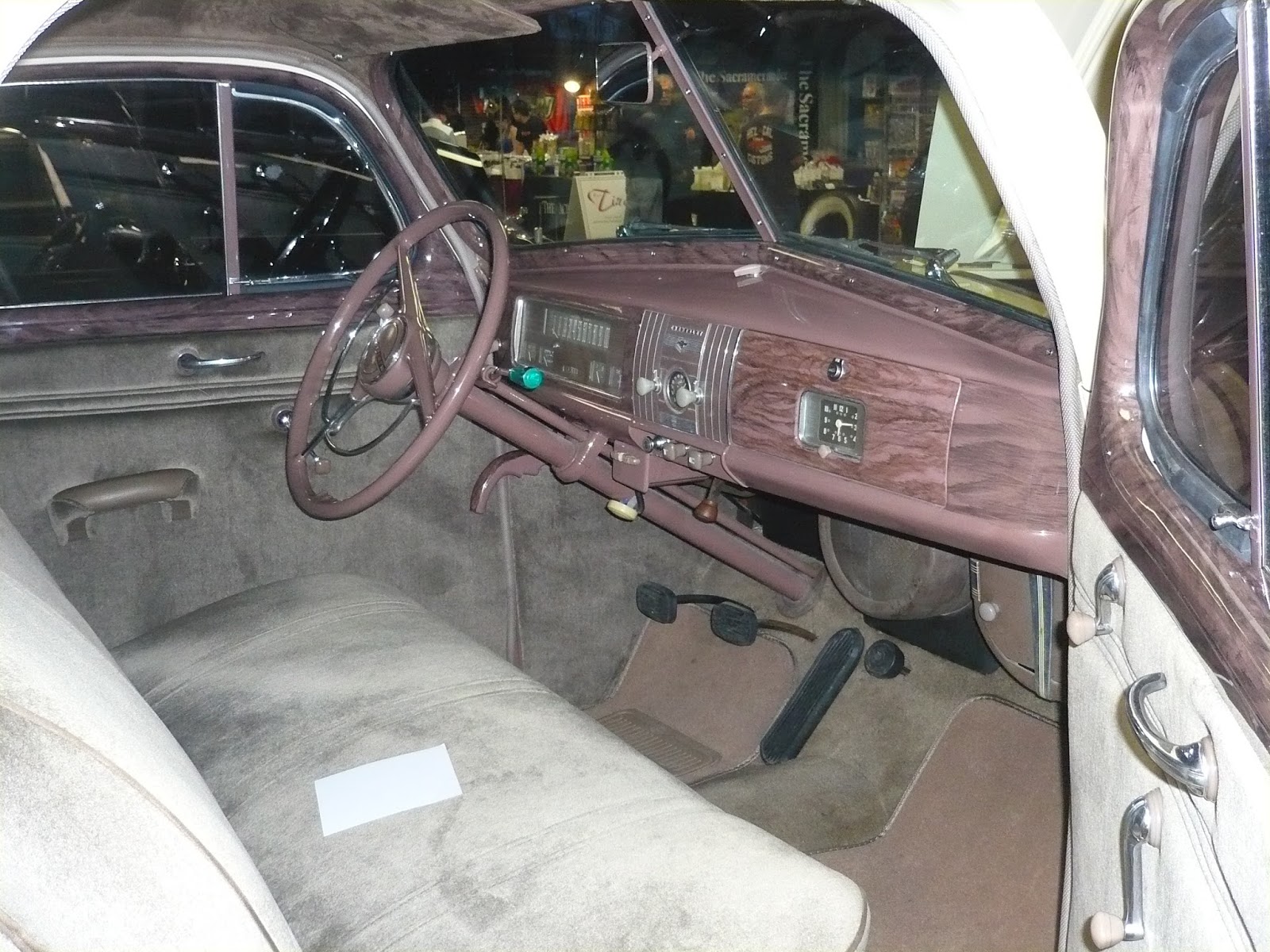
Owner David Hightower displayed this beautifully restored 1939 Chevrolet Master Deluxe 4-passenger coupe painted in ‘Italian Cream’ in the restored class at the 2017 Sacramento Autorama. This car was not heavily accessorized but it does feature bumper guards ($3.95 for the set of four) the center grille guard which was a $2.50 option and a rear view mirror and $2.95 option.   

The ‘Master Deluxe’ was the top of the 1939 Chevrolet line introduced in October 1938 with seven body styles offered on the 112-1/4 inch wheelbase chassis. The 1939 Chevrolet Master Deluxe low-price leader at $684 was the 2-door business coupe (which lacked a back seat), then the 2-door 4-passenger coupe like our featured car which sold for $750. There were a couple of two-door sedans to choose from: a two-door sedan without a trunk which sold for $689 and the two-door “Town sedan” which featured a trunk and sold for $720.

There were two four-door sedans offered, the regular sedan without a trunk for $745 and the “Sport sedan” with a trunk which listed for $766. The top of the line was the 4-door station wagon which retailed for $833. All the Master Deluxe models except the wagon were 188 inches in overall length.  

Chevrolet sold 20,908 4-passenger coupes like our featured car in 1939, far behind the ‘Sport sedan’ with 110,521 units and the ‘Town sedan’ with 220, 181 cars built in 1939. Chevrolet built a total of 386,656 Master Deluxe cars in 1939, with total Chevrolet production of 577,278 vehicles, which made Chevrolet the best-selling brand in America ahead of Ford’s 487,000 and Plymouth’s 423,000.

In 1939, the Chevrolet division had ten assembly plants across the United States from Tarrytown and Buffalo New York, Baltimore, Atlanta in the east, to Flint Michigan, St. Louis and Kansas City in the Middle West. Chevrolet also operated plants in Norwood Ohio a suburb of Cincinnati, Janesville in southern Wisconsin, and East Oakland California a plant which operated from 1916 to 1963.  
 
In the lower left corner of the above photograph by the author
you can see the original stamped aluminum Fisher body tag.
Please click to enlarge 
The Chevrolet six-cylinder inline 216-1/2 cubic inch engine featured the valves in the head and produced 85 horsepower at 3200 revolutions per minute (RPM) while the engine produced its maximum torque output of 170 foot-pounds between 900 and 2000 RPM. The engine featured three-ring cast iron pistons, removable valve stem guides, and a single Carter carburetor manufacturer in St. Louis Missouri.

The Chevrolet six-cylinder engines were built in either Flint Michigan or Tonawanda New York, while the 3-speed transmissions were sourced from General Motors factories in Toledo, Saginaw Michigan or Muncie Indiana. The 551-pound engine and transmission unit was suspended via rubber mounts from five points in the chassis. The crankshaft which rode on four bearings weighed 69 pounds all by itself.
The Master Deluxe featured knee-action front suspension with helical coil springs while the semi-floating rear end was suspended on semi-elliptical leaf springs. The Master coupe had a curb weight of 2960 pounds with nearly 50-50 weight distribution on the 16 by 4 inch wheels with 4-wheel hydraulic brakes.    

In addition to the speedometer the gauge cluster in the wood-grain painted steel dashboard features water temperature, fuel gauge, oil pressure gauge and a battery charge indicator. This car is also equipped with an optional ($4.75) hand-wound clock in the locking glovebox door.  While this car was advertised as a four-passenger, the rear two seats were referred to in sales literature as “opera seats” which were divided and folded up, and with just 22 inches behind the front bench seat, the rear seats surely would not comfortable for long trips. Being a “West Coast” car it does not have a heater accessory.  

The trunk features enclosed spare tire storage (something the sedan and town sedan body styles lacked), and measures 39 inches deep and is 45 inches wide. In the photograph by the author you can also see the twin taillights a standard feature on the Master Deluxe, while the chrome exhaust pipe extension and whitewall tires were extra cost accessories.  
All photos by the author

Wednesday, May 3, 2017


INDYCAR DRIVERS GOT AN EXCLUSIVE LOOK AT THE NEW PHOENIX RACEWAY CONSTRUCTION PROJECT  


On Friday April 28, Beach Whiskey Outback Steakhouse Qualifying Day, the stars of the Verizon IndyCar Series which included Helio Castroneves, Scott Dixon and Tony Kanaan got an up-close look at the Phoenix Raceway Project Powered by DC Solar. Phoenix Raceway President Bryan R. Sperber and the drivers had the opportunity to “test drive” prototypes of the new grandstand seating and helped celebrate a key milestone in the construction process which broke ground in February 2017..
 
 
Helio Castroneves

Scott Dixon

Tony Kanaan
 

The entire Verizon IndyCar Series field for the Desert Diamond West Valley Phoenix Grand Prix signed the first 30-foot steel beam that will be used in construction of the new grandstand. Fans have been the foundation of racing at Phoenix Raceway and an integral part of the modernization project and to ensure that fans are forever a part of the history at Phoenix Raceway, they signed their names on the steel beam next to their favorite driver’s signatures throughout the weekend

Information and photos provided by Aimee Dulebohn, Senior Manager of Communications at Phoenix Raceway